
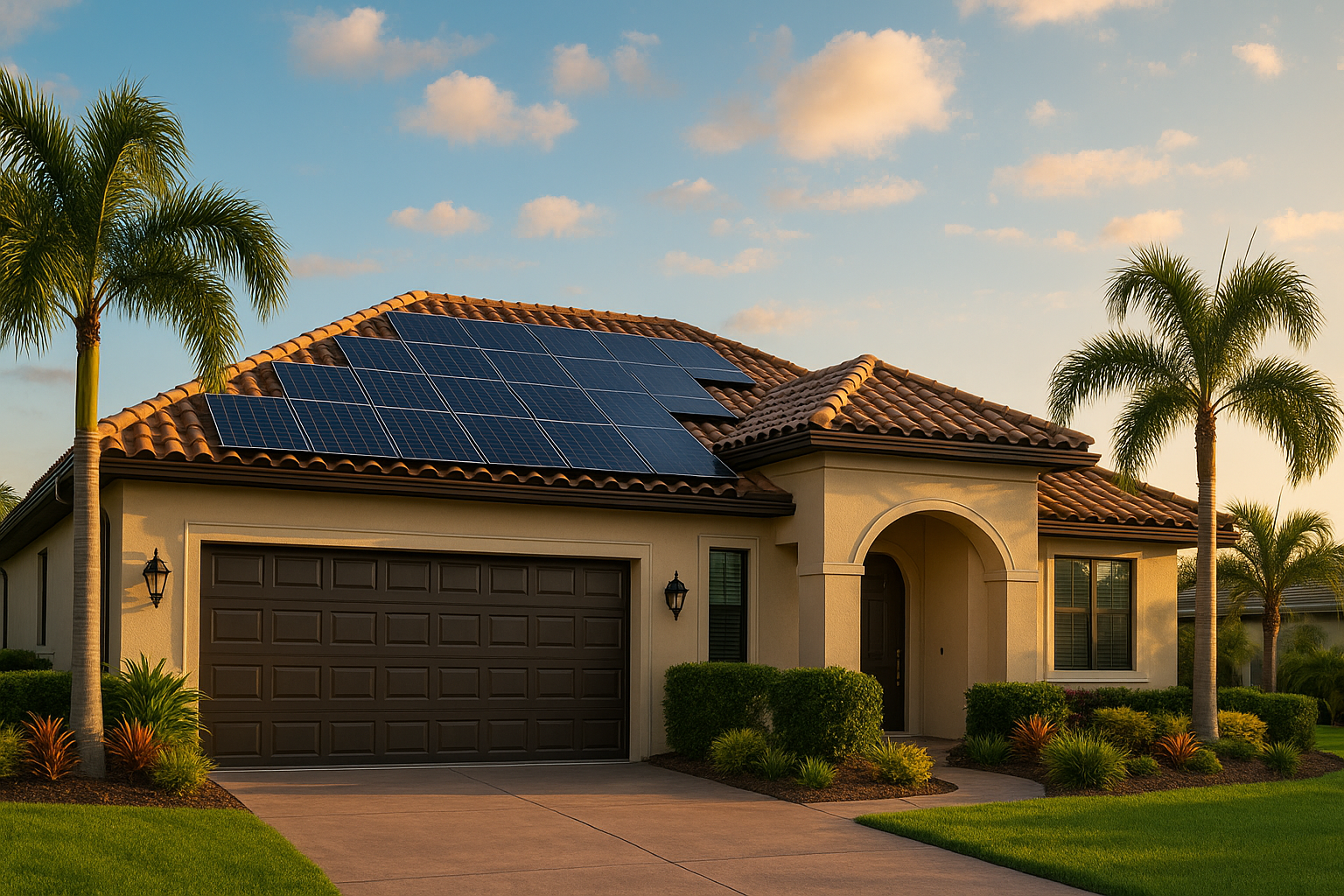
Sunrun is the largest residential solar installer in the United States, with roughly 1 million installed customers. They are also one of the most-reviewed and most-complained-about. This guide explains what Sunrun actually offers, where their model works, where it breaks down, and when a local solar installer is a better fit for your home.
Had a SunPower system? See our SunPower alternative guide (what to do after the 2024 bankruptcy).
Comparing another national installer? See our Blue Raven Solar alternative guide.
Quick comparison: Sunrun vs. a local installer
| Factor | Sunrun | Local installer (e.g., Higher Power Solar) |
|---|---|---|
| Pricing per watt installed | $3.50 – $4.50 | $2.50 – $3.30 |
| Primary financing | Lease / PPA (you don’t own the system) | Cash or loan (you own; you claim 30% federal tax credit) |
| Installation timeline | 10–20 weeks typical | 4–12 weeks typical |
| Customer service reputation | BBB rating B-; 8,000+ complaints in last 3 years | Varies by installer; check local BBB + state contractor license board |
| Warranty enforceability | Strong if Sunrun stays in business; concerning given 2023–2024 industry restructuring | Strong if local installer has been in business 5+ years |
| Equipment selection | Limited to 1–2 panel brands | Usually 3+ panel brands available |
| 30% federal tax credit | Goes to Sunrun (lease/PPA) or to you (loan/cash) | Goes to you (you own the system) |
What Sunrun actually offers
Sunrun’s core product is a Power Purchase Agreement (PPA) or solar lease. Under these arrangements:
- Sunrun owns the solar system on your roof
- You pay Sunrun a monthly fee (lease) or a per-kWh rate (PPA) for the electricity it generates
- Sunrun claims the 30% federal Investment Tax Credit (the customer does not)
- The agreement typically runs 20–25 years
- Most contracts include an annual price escalator (2–3% per year)
Sunrun also offers loans and outright sales, but the bulk of their business is lease/PPA. That’s where the model breaks down for many homeowners.
Where Sunrun’s model breaks down
- You don’t own the system
- That matters when you sell the home: many buyers don’t want to assume the lease, and the lease can sit as an encumbrance until you buy it out. Sunrun’s buyout terms are typically calculated as fair-market value plus penalty.
- Sunrun keeps your 30% federal tax credit
- On a $30,000 system, that’s $9,000 of value flowing to Sunrun instead of you. Over a 25-year lease, the foregone tax credit alone often exceeds the lease’s marketed “savings.”
- The escalator
- A 2.9% annual escalator (Sunrun’s typical) means a $150/month lease payment in year 1 becomes $300/month in year 25. Compare to your current FPL or SDG&E bill: utility rates also rise, but if the escalator outpaces your local utility, you can end up paying more for leased solar than you would for utility power.
- Customer service is the biggest complaint cluster
- Sunrun’s BBB profile shows over 8,000 complaints in the last 3 years (most common: billing errors, unresponsive customer service, slow warranty claims, miscommunication about system performance).
- Limited equipment choice
- Sunrun installs primarily 1–2 panel brands. If you want a specific brand (Q CELLS, Silfab, Maxeon, REC), Sunrun may not offer it.
The price gap: Sunrun vs. local installer
Sunrun’s cash purchase pricing typically runs $3.50–$4.50 per watt installed. Most reputable local installers in 2026 price between $2.50 and $3.30 per watt. On a 10 kW system that translates to:
| Provider | Per watt | Gross 10 kW cost | After 30% credit (you own) |
|---|---|---|---|
| Sunrun cash purchase | $3.90 typical | $39,000 | $27,300 |
| Local installer (avg.) | $2.90 typical | $29,000 | $20,300 |
| Difference | $1.00 | $10,000 | $7,000 |
The $10,000 gap is overhead: Sunrun’s national sales operations, brand spend, executive overhead, and shareholder margin. A local installer with a small office and no national sales team operates at much lower overhead.
When Sunrun does make sense
- You can’t or don’t want to claim the 30% federal tax credit — if you have no federal tax liability (retired on Social Security with no other income, for example), the credit isn’t usable. A PPA lets Sunrun monetize it.
- You don’t have the cash and can’t qualify for a solar loan — Sunrun’s lease is a way to get solar without underwriting a loan.
- You plan to sell the home within 5 years AND can transfer the lease cleanly — sometimes the buyer assumes the lease. Sometimes not. Verify before signing.
- Your area has no qualified local installer — true in some rural markets. Less true in Southwest Florida, San Diego County, or Las Vegas.
When a local installer is the better choice
- You can claim the federal 30% tax credit — that’s $9,000 on a typical system that should go to you, not Sunrun
- You want to own the system at the end — and capture the full free-electricity benefit for decades after the system pays itself off
- You want competitive pricing — local installers consistently beat Sunrun by ~25% per watt
- You want responsive service — local installer answers your call directly; national chains route through call centers
- You want specific equipment brands (Q CELLS, Silfab, REC) — local installers offer broader selection
- You’re combining with roof replacement — local installers often pair with roofing contractors or do both themselves (Higher Power Solar does)
How to evaluate a local installer vs. Sunrun
Use the same checklist regardless of who you’re considering:
- State contractor license number — verify on the state board
- NABCEP certification on staff
- Workmanship warranty — at least 10 years, ideally 25
- Years in business in your local market — 5+ years is meaningful
- Written quote with line-item pricing — equipment model numbers, system size in kW, projected annual production
- References from nearby installs in the last 12 months
- BBB and state contractor board record
See our full guide to picking the best solar installation company for the longer checklist.
Higher Power Solar as a Sunrun alternative
Higher Power Solar & Roofing serves Southwest Florida, San Diego County, and the Las Vegas metro. We’re a licensed local installer with NABCEP-certified staff, in-house roofing (so you can combine solar + roof replacement as one project), and per-watt pricing in the $2.50–$3.10 range — substantially below Sunrun.
What we don’t do: PPAs or solar leases. We sell systems outright (cash or loan), which means you own the system and capture the 30% federal credit. If a PPA is genuinely your only path to solar, Sunrun or a similar provider is the right fit; we’ll tell you that directly.
Frequently asked questions
Is Sunrun out of business? No. Sunrun is publicly traded (NASDAQ: RUN) and remains the largest residential solar installer in the US. However, several smaller solar companies went out of business in 2023–2024 during the industry shake-out. If you’re considering any installer, verify they’re still operating.
Can I cancel a Sunrun lease early? Yes, but it’s expensive. Buyouts are calculated as fair-market value of the system plus an early-termination penalty. Read the contract before signing.
What is the difference between a Sunrun lease and a PPA? A lease has a fixed monthly payment regardless of system production. A PPA bills per kWh produced. The total economics are similar; the main difference is whether your bill varies with weather.
Does Sunrun handle warranty claims well? Mixed reputation. Sunrun has a centralized warranty service center; response times vary. Local installers typically handle warranty issues faster because they’re geographically close and have direct accountability.
If I buy out my Sunrun lease, do I get the 30% federal tax credit? No. The credit was claimed by Sunrun in the year of installation. A buyout transfers ownership but does not restart the credit.
How does Sunrun’s pricing compare in Florida specifically? Florida installers (including Higher Power Solar) consistently come in at $2.50–$3.10 per watt cash. Sunrun’s Florida cash quotes typically run $3.80–$4.50 per watt. On a 10 kW system, that’s a $13,000–$17,000 difference gross.
Get a Higher Power Solar quote
Call (619) 456-5352 or schedule a free in-home consultation. We’ll pull your last 12 months of utility bills, walk your roof, and produce a written, line-item quote you can directly compare against any Sunrun proposal. No high-pressure sales, no same-day-only deals.