


Solar Services & Comparisons
Around Our Southwest Florida Service Area
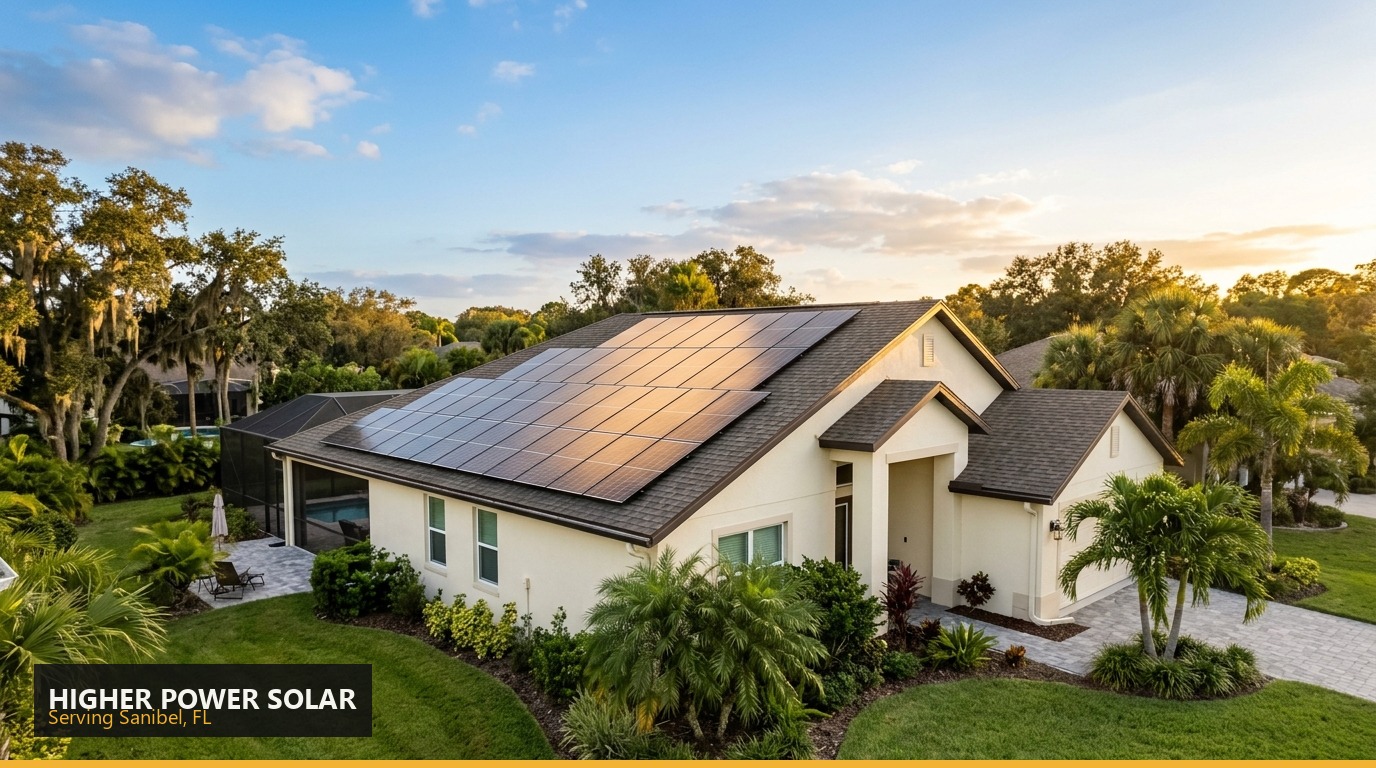
Solar + Roofing in Sanibel, FL — What Local Homeowners Should Know
Sanibel is a barrier island in Lee County connected to the mainland by the Sanibel Causeway. Salt air and hurricane exposure mean every roofing and solar component needs to be corrosion- and wind-rated for the environment. Sanibel is served primarily by LCEC, and homeowners here see some of Florida's highest summer cooling loads — which means solar payback is generally faster than in cooler parts of the state. For an overview of how a complete solar installation works (panels, inverter, battery, permits, interconnection), see our installation guide. For a full breakdown of what FPL actually charges per kWh in 2026, see our rate explainer. Combined with the 30% federal solar tax credit (currently extended through 2032) and Florida's sales and property tax exemptions on solar equipment, the math has rarely been better.
Hurricane-Rated Solar: Built for Southwest Florida Weather
Hurricane Ian's storm surge and 150 mph winds devastated Sanibel in 2022, with many homes lost or needing complete roof replacement. Rebuilds present a one-time opportunity to install hurricane-rated roofing with integrated solar. Every solar system Higher Power Solar installs in Lee County is mounted to meet the Florida Building Code's wind zone for the area — typically 150–170 mph design wind speeds depending on exact location. We use stainless-steel hardware throughout because salt air and humidity will eat through standard fasteners within a few years. Modules are bolted directly to the roof rafters or trusses where structurally required, not just to the deck.
Lee County Permits, Inspection, and Net Metering
Every solar install in Sanibel requires a building permit pulled through Lee County (plus utility interconnection approval from LCEC). Higher Power Solar handles the entire permit package: engineering drawings, structural calculations, electrical one-line diagrams, and the application itself. We schedule the city/county building inspection and then file for utility interconnection once that passes. Typical end-to-end timeline from contract signing to system turn-on is 6–12 weeks, depending on permit office backlog and utility queue. Florida currently retains 1:1 net metering for systems installed today, meaning every kilowatt-hour your system exports to the grid offsets one kilowatt-hour you draw later in the month.
Why Sanibel Homes Need Battery Backup
A standard grid-tied solar system shuts down automatically when the grid goes out — that's a safety requirement so your panels don't back-feed power into lines that utility crews may be working on. The fix is a battery system (Enphase IQ Battery, Tesla Powerwall, or similar) that disconnects from the grid during an outage and powers critical loads from your solar and stored battery capacity. For most Sanibel homes, a single 10–13 kWh battery covers the essentials (refrigerator, internet, a few lights, a window AC unit) for 12–24 hours. Two batteries roughly doubles that runtime. Given Southwest Florida's outage history, batteries have become the most-requested add-on we install.
Service Area: Neighborhoods We Cover Near Sanibel
Higher Power Solar serves homes across Sanibel and the surrounding area, including Periwinkle Way, Gulf Drive, the Sanctuary, East End, and West End. If you're unsure whether your address is in our service area, call us at (941) 830-4937 — we'll confirm coverage in 30 seconds.
We also serve neighboring cities: Fort Myers, Fort Myers Shores, Punta Gorda.
Frequently Asked Questions
How long does a solar install take in Sanibel? The on-roof install itself is typically 1–3 days. The full process from signing the contract to receiving permission-to-operate from LCEC is 6–12 weeks.
What size system do most Sanibel homes need? Most single-family homes in the area need between 8 kW and 14 kW of solar to offset their full electric bill. The right number depends on your roof orientation, shading, and historical kWh usage — we pull your last 12 months of LCEC bills to size the system correctly.
Does Higher Power Solar work on metal, tile, and shingle roofs? Yes — we install on all common Florida roof types. The mounting hardware differs (tile hooks for tile, S-5! clamps for standing-seam metal, flashed L-feet for shingle) but the system design and warranty are the same.
Why combine roof replacement with solar? Two reasons. First, you avoid paying to remove and reinstall the array down the road when the roof eventually wears out (typical asphalt shingles last 20–25 years; solar panels last 30+). Second, the IRS allows the 30% federal solar tax credit to apply to the portion of the roof that is structurally required to support the array — meaningful savings on a combined project. See our full roof replacement guide for material options, hurricane code requirements, and project timeline.
Get a Free Solar Quote in Sanibel
Call (941) 830-4937 or request a free in-home consultation. We'll pull your last 12 months of LCEC bills, walk your roof, and design a system sized to your actual usage. No high-pressure sales — just honest numbers.